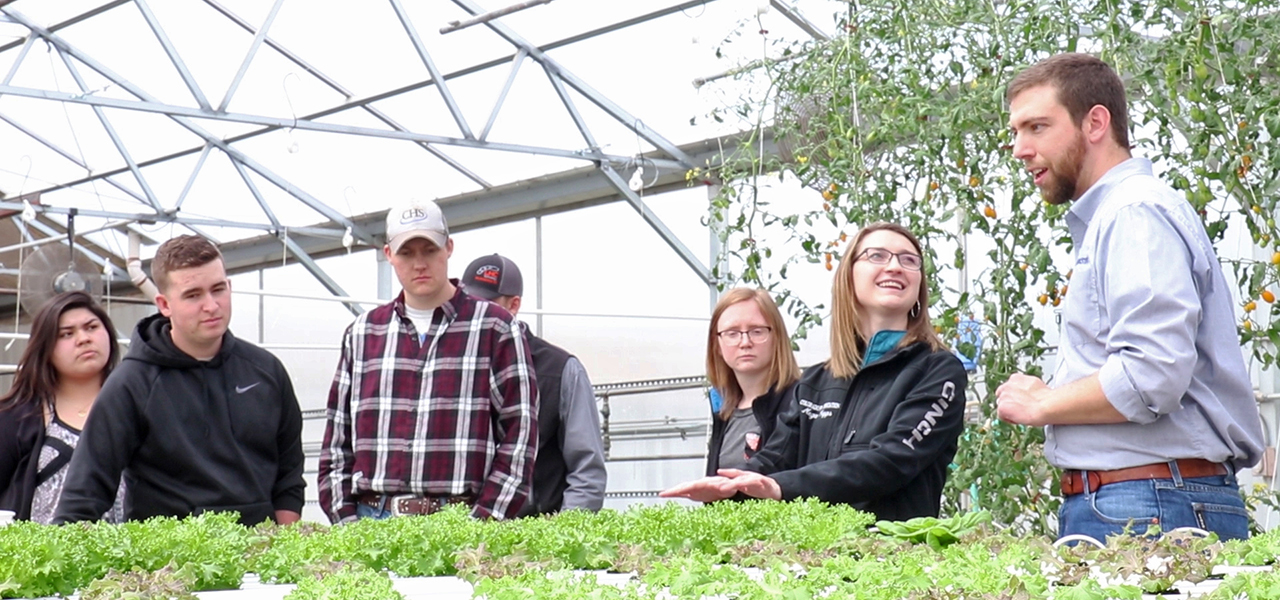
Class in greenhouse
Area of Study

Agricultural Education

Agricultural education lays the groundwork for students who aspire to be teachers with well-rounded knowledge of agriculture, food, natural resources and the technology used in modern agricultural production. Graduates of agricultural education are taught to help their students develop critical communication, leadership and management skills.
Transfer Degrees

Agricultural Education Concentration

Associate of General Studies
60 Credits

Agricultural Education Designation

Associate of Science
Degree with Designation
63 Credits
Workforce Ready
Why Teach Agriculture?  Agriculture teachers inspire growth.
  • Teach by doing
  • Share their passion for agriculture
  • Create/Teach lessons that are hands-on
  • Reach students, including those who might not be successful in a traditional classroom
  • Teach about cutting-edge topics like cloning, satellite mapping, bio-fuels, and alternative energies
  • Travel in state, nationally and even internationally
  • Work with new and emerging technology from agribusiness companies
degree in agricultural education
Agricultural education teaches future educators about agriculture, food and natural resources.

Agriculture teachers rarely experience the same day twice. One day they might be in a classroom or laboratory, while the next day they are visiting students in the field. They may spend a day preparing teams for a Future Farmers of AmericaTM Career Development Event, or leading a community service activity with an FFA Chapter.

Agricultural education teaches future educators about agriculture, food and natural resources. Through these subjects, agricultural educators teach students a wide variety of skills, including science, math, communications, leadership, management and technology.

Potential jobs for graduates with a degree in agricultural education include teaching high school agricultural science, agriculture literacy coordinator, agricultural education professor, farm business management instructor, two-year technical college agriculture instructor, adult agricultural education instructor and more.


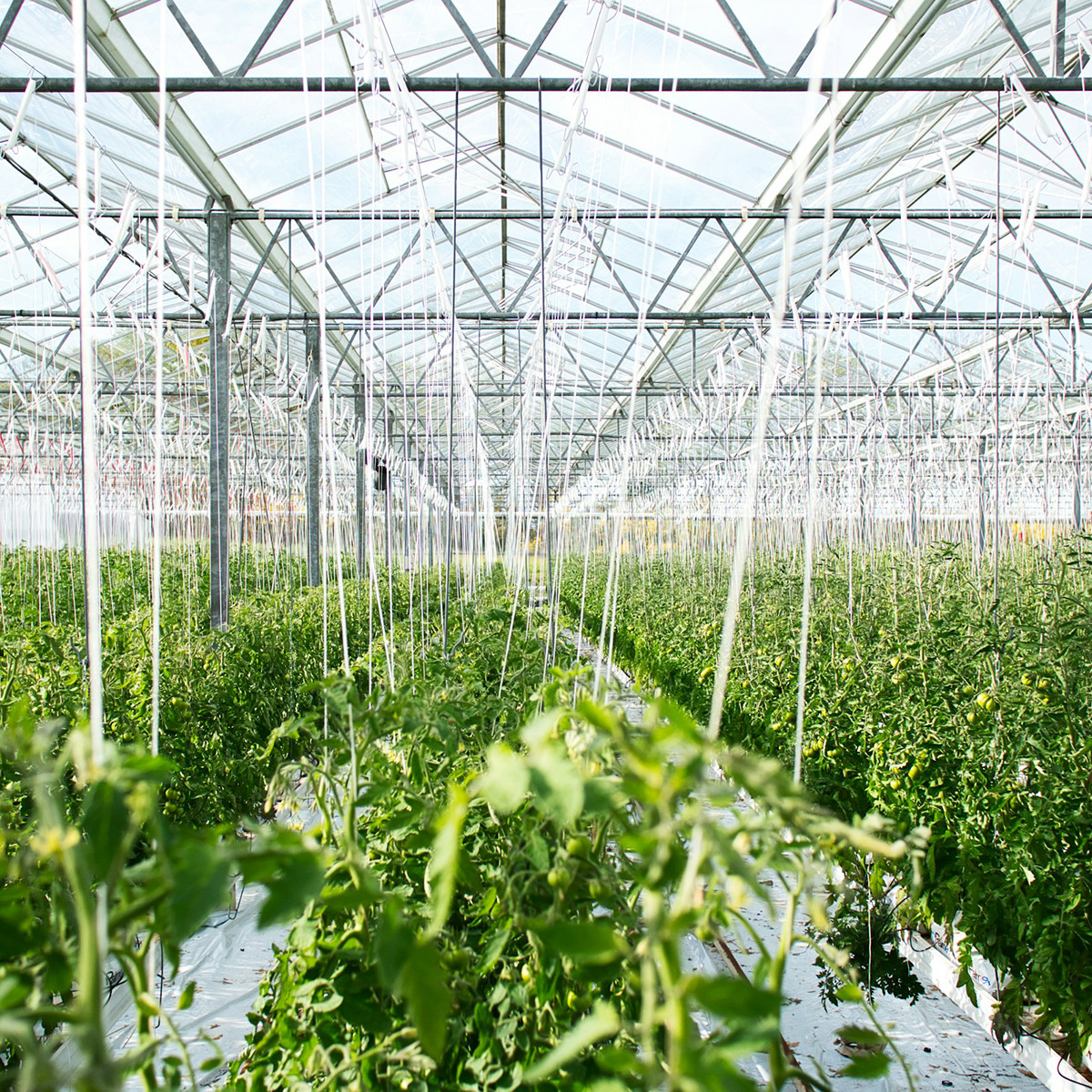
greenhouse
More about the Program

According to the Bureau of Labor Statistics, overall employment of postsecondary teachers is projected to grow 8 percent from 2022 to 2032, faster than the average for all occupations.

About 118,800 openings for postsecondary teachers are projected each year, on average, over the decade. Many of those openings are expected to result from the need to replace workers who transfer to different occupations or exit the labor force, such as to retire.

Employment

Projected employment of postsecondary teachers varies by occupation (see table). Both part-time and full-time postsecondary teachers are included in these projections.

The number of people attending postsecondary institutions is expected to grow over the projections decade. Students will continue to seek higher education to gain the knowledge and skills necessary to meet their career goals. As more people enter colleges and universities, more postsecondary teachers will be needed to serve these additional students. Colleges and universities are likely to hire more part-time teachers to meet this demand. In all disciplines, there is expected to be a limited number of full-time nontenure and full-time tenure positions.

A growing number of older people, who are more likely than young people to need medical care, will create increased demand for healthcare. More postsecondary teachers are expected to be needed to help educate workers who provide healthcare services.

However, despite expected increases in enrollment, employment growth in public colleges and universities will depend on state and local government budgets. If budgets for higher education are reduced, employment growth may be limited.

The U.S. Bureau of Labor Statistics lists the median annual wage for postsecondary teachers was $80,840 in May 2022. The median wage is the wage at which half the workers in an occupation earned more than that amount and half earned less. The lowest 10 percent earned less than $47,370, and the highest 10 percent earned more than $173,730.

  1. Produce a written document that clearly explains an agricultural concept.
  2. Analyze information and use critical thinking to solve an agricultural problem.
  3. Explain how agriculture relates to global, social, and cultural concepts.
  4. Develop skills useful in the agriculture industry or transfer to an agricultural degree.
  5. Apply scientific information and the scientific method to explain agricultural concepts.
Photo of Helin Halden, from Turkey
Student Profile
Helin Halden, Turkey

The most important thing that I see at Northeastern is that everybody is helpful. Sometimes I don't understand or I can't talk perfectly but everybody is trying to listen and understand me. Also it's hard to stay far away from family, but here I can feel more comfortable because everyone says, "Hello, how are you?", "How's it going?", to each other. That is perfect!

Davon Keyes standing in front of an ambulance
Student Profile
Devon Keyes
Daniel Knight
Student Profile
Daniel Knight

Seeing how the NJC shop compared to his high school shop was mind blowing.

Faculty

Andy Bartlett
Department Chair - Agriculture
970-521-6635
Beede-Hamil 11B
Sterling
Andy Bartlett

Staff

Laurie Cook
Administrative Assistant II- Agriculture
970-521-6644
Beede-Hamil
Sterling
Laurie Cook